Columbus clay soil and your basement
The ground around most central Ohio homes is the main reason basements here take water. Understanding it makes the fixes make sense.
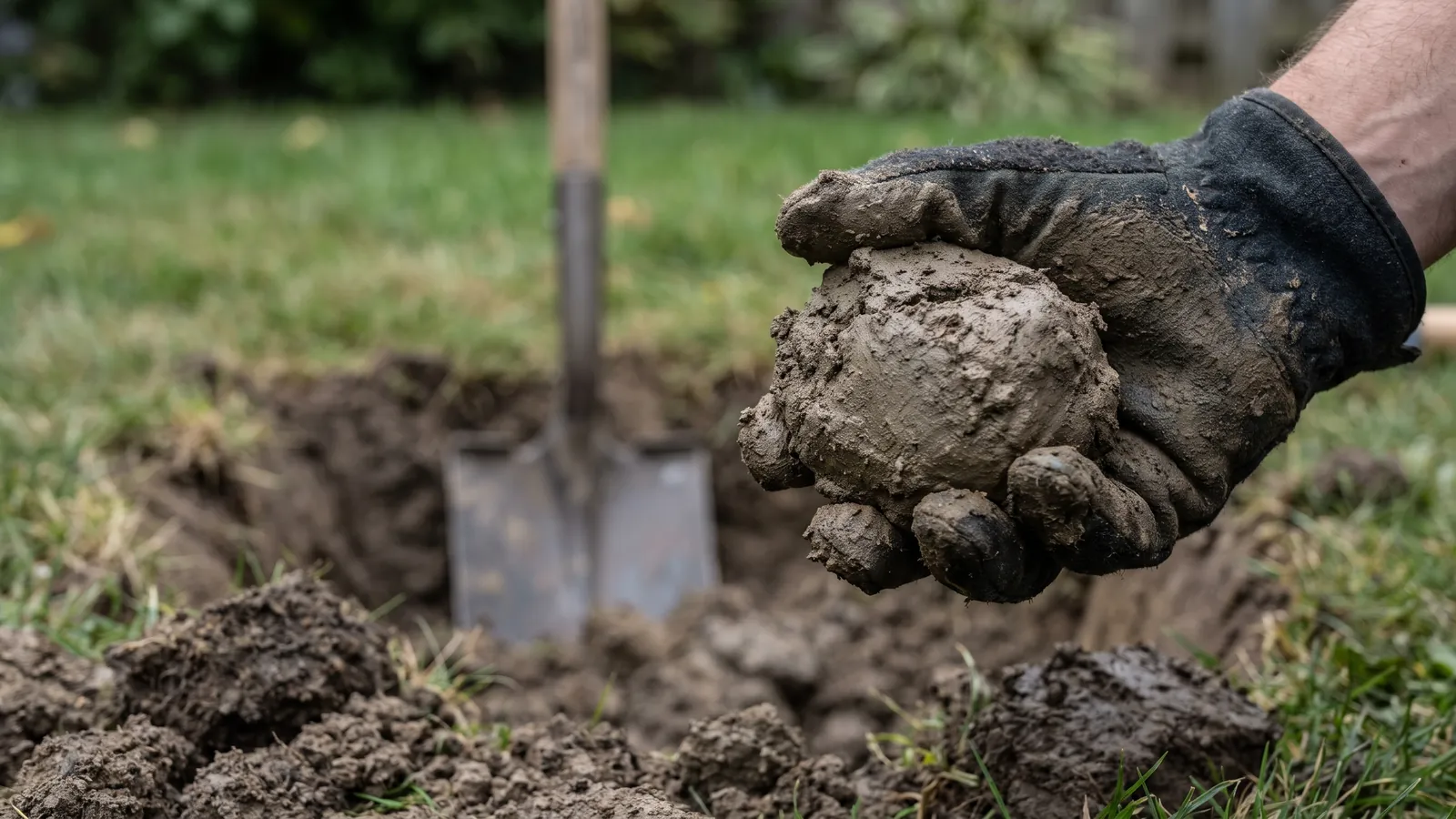
What glacial till is
Glaciers left much of central Ohio covered in till: a dense mix of clay and silt with stones scattered through it. Clay particles are tiny and flat, and water moves through them slowly. When the soil around a basement is mostly clay, rain soaks in near the surface and then has trouble going anywhere else.
Hydrostatic pressure
Saturated soil presses water against the foundation. The deeper the water stands, the harder it pushes, which is why leaks so often appear low on the wall and at the joint between the wall and the floor. That pressure can last for days after a storm because the clay drains so slowly.
Swell and shrink
Clay swells when wet and shrinks when dry. Over a year that movement opens gaps along the foundation, works on cracks and can push on walls. In late summer you may see the soil pulled away from the house; in spring those gaps are the first place water goes.
Freeze-thaw
Columbus gets 30 to 40 freeze-thaw cycles in a typical winter. Water trapped in a crack expands about 9% when it freezes, so each cycle can widen the crack a little.
What helps, cheapest first
- Keep roof water away: clean gutters, downspouts extended several feet or piped away.
- Grade soil to slope away from the house; settled backfill often slopes the wrong way.
- Keep window wells drained and covered.
- Relieve pressure at the wall: an interior drain or a new footer drain with exterior waterproofing.
- Run a reliable sump pump with a backup.
Questions
Can I replace the clay around my house?
Exterior waterproofing replaces the soil right against the wall with washed stone, which helps water reach the drain. Replacing clay across a whole lot isn't practical.
Why did my basement start leaking after years of being dry?
Footer drains silt up, pumps wear out, soil settles toward the house and freeze-thaw widens cracks. Any of these can tip a dry basement into a wet one.
More reading: all costs and guides · FAQ